
The Federal Reserve sets U.S. monetary policy to promote maximum employment and stable prices in the U.S. economy.

The primary way the Federal Reserve implements monetary policy is by targeting the federal funds rate
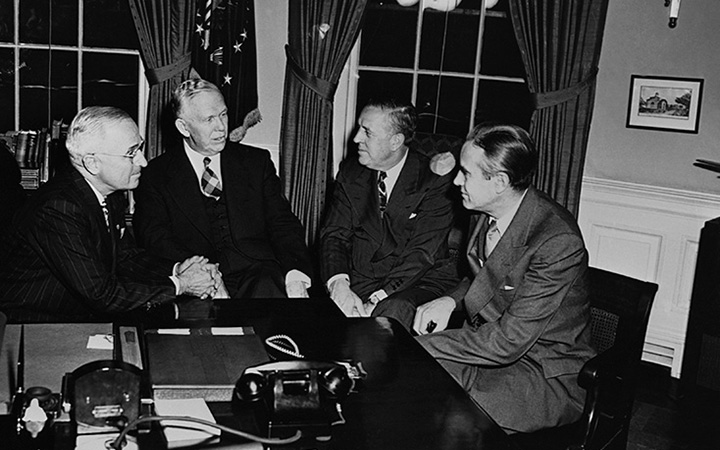
The Fed pegged interest rates at a low level during WWII and enforced the peg after the war ended
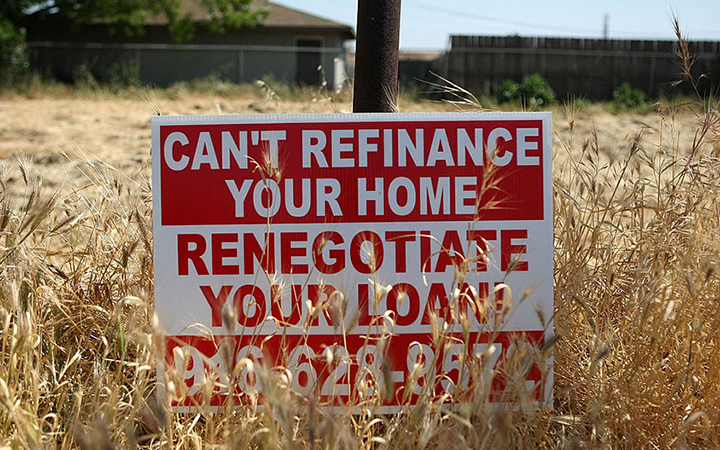
The 2007-10 crisis stemmed in part from an expansion of mortgages to high-risk borrowers
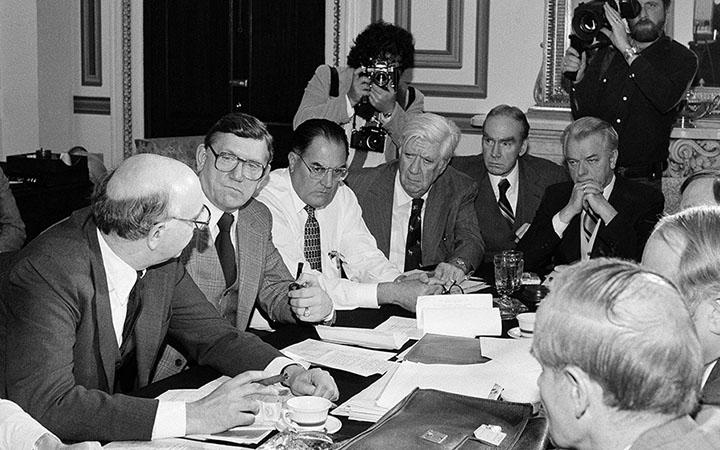
The 1980 Act was one of the most important laws to affect the Fed in its 100-year history
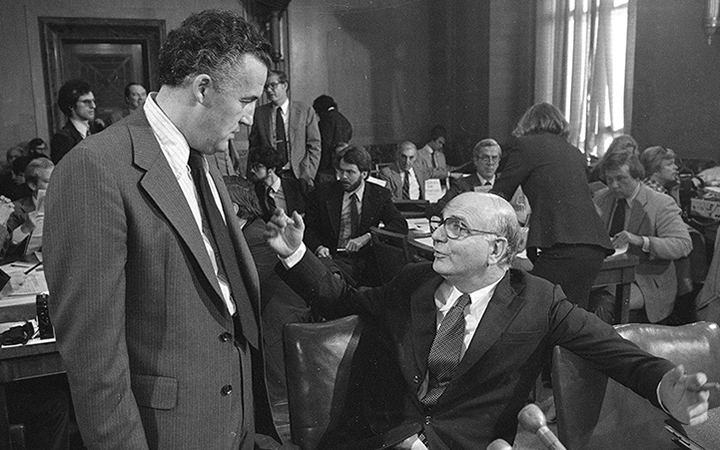
In 1979, Fed Chairman Paul Volcker announced new anti-inflation measures
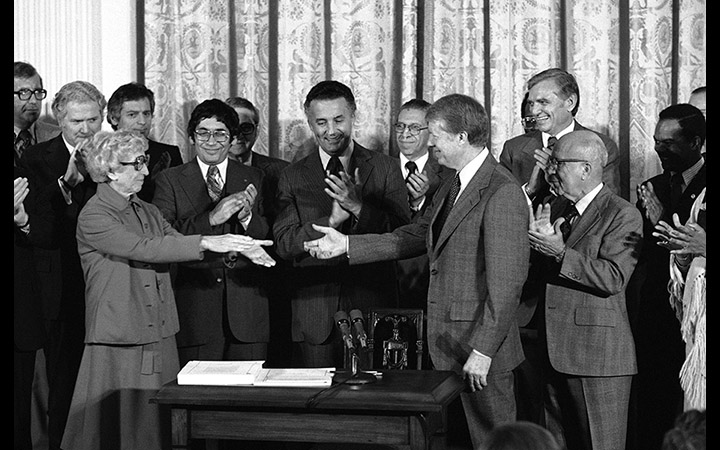
Commonly called Humphrey-Hawkins, the 1978 Act set new goals for the nation's economic policymakers
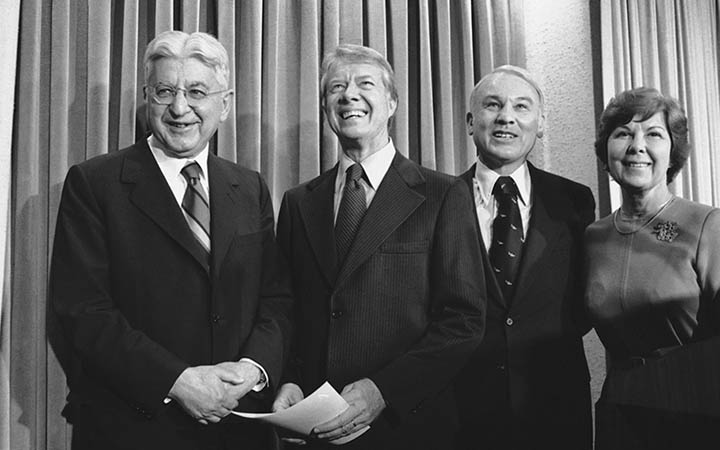
This 1977 law was instrumental in shaping the current Fed
![Close-up of a "Whip Inflation Now" [WIN] button, President Ford's symbol of the fight against inflation.](/-/media/Project/FedHistory/FedHistory/Images/great_inflation_1_720x450.jpg?h=450&iar=0&w=720&hash=4BE729FA10DF3916273A197B0A128E4A)
The defining macroeconomic period of the second half of the 20th century lasted from 1965 to 1982
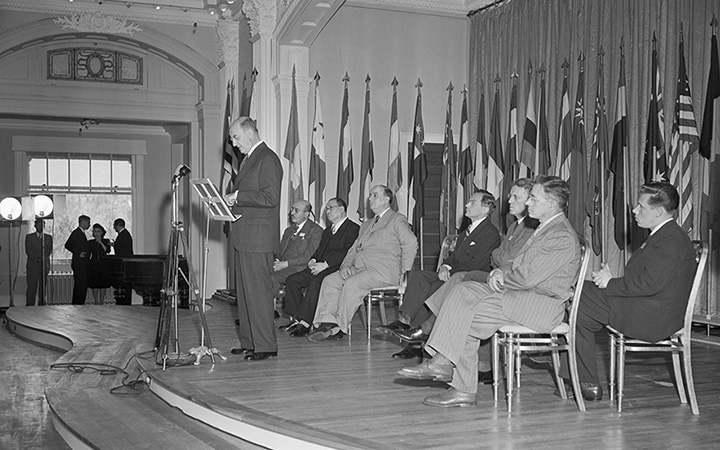
The international currency system became operational in 1958
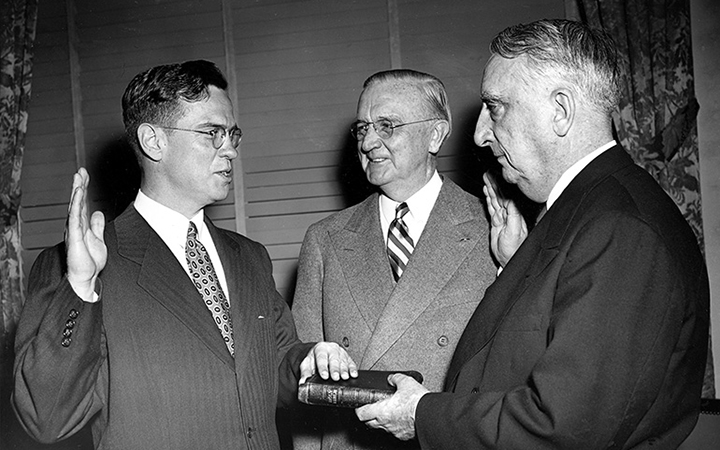
The 1951 agreement that laid the foundation for the modern Federal Reserve
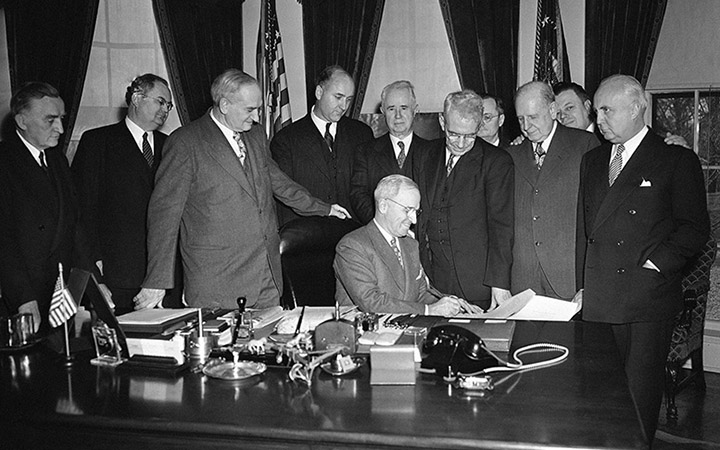
President Truman signed the Act in 1946 in the aftermath of WWII
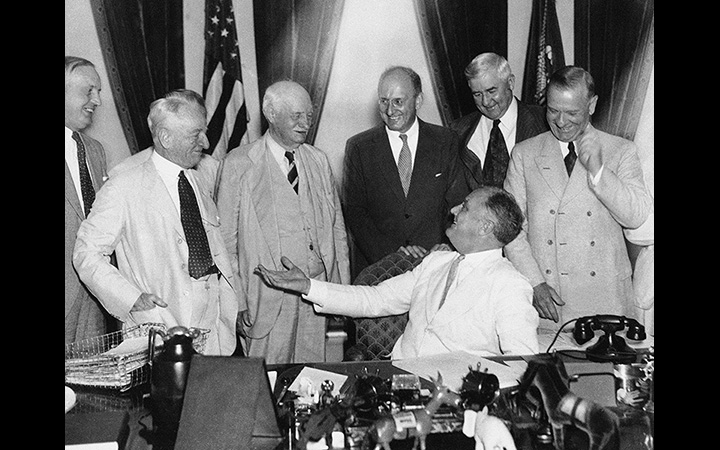
This legislation restructured the Fed in both cosmetic and consequential ways
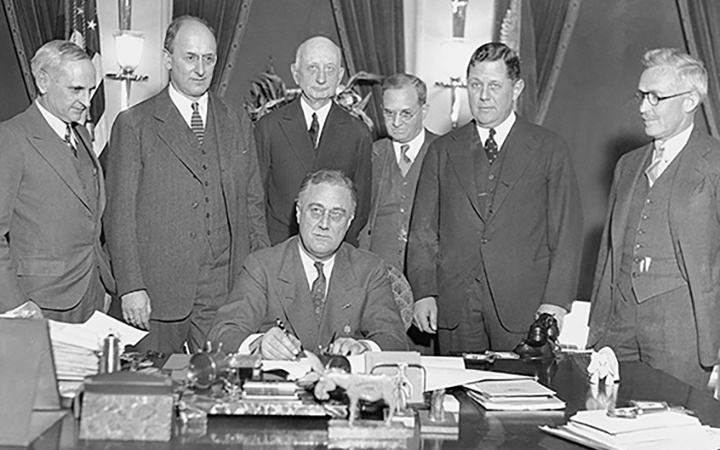
The 1934 law was the culmination of FDR's controversial gold program