
Penn Central Commercial Paper Crisis, 1970

In June 1970, the bankruptcy of the Penn Central railroad roiled the market for commercial paper, a form of short-term debt. As commercial paper issuers pivoted to commercial banks as a source of credit, the Federal Reserve took action to ensure the banking system had adequate funds. The episode illustrates the Fed's role as the lender of last resort and the financial stability risks that can emerge from the growth of financial activities outside of the banking system.
Commercial paper is a type of short-term debt, often due in 30 days or less and usually issued by large corporations with strong credit reputations. It is unsecured, meaning that investors rely only on the issuer's promise to repay.
The commercial paper market in the U.S. dates back to the 1800s and has evolved significantly over time. By the late 1960s, two important aspects of the market were precursors to the Penn Central episode. First, the market was growing rapidly. Commercial paper outstanding rose from $9 billion in 1965 to $40 billion by 1970 (SEC 1972, p. 273). In comparison, commercial banks held about $110 billion in commercial and industrial loans in 1970 (Federal Reserve Bulletin, July 1970, p. A24).
Second, the investor base for commercial paper shifted away from the banking system. In 1945 commercial banks had owned the large majority of commercial paper, but by the late 1960s banks owned less than 20 percent (Federal Reserve Bank of Chicago 1968, pp. 8-10). Instead, nonfinancial corporations, insurance companies, pension funds, endowments, mutual funds, and others became the main investors. Though commercial banks no longer owned much commercial paper, many (but not all) commercial paper issuers negotiated lines of credit with banks to backstop their ability to repay the paper if needed.
Regulation Q was a key cause of the growth of commercial paper activity outside the commercial banking system. This regulation capped the interest rates that banks could pay on deposits, the ostensible purpose of which was to prevent "excess" competition for deposits believed to have caused bank failures in the 1930s. However, investors could circumvent these limitations by moving their funds outside of the banking system. As inflation and interest rates rose in the late 1960s, investors bought higher-yielding commercial paper. The same dynamic was behind the growth of money market mutual funds in the 1970s.
The Penn Central Company's June 1970 Default
In 1970, Penn Central was the largest railroad in the United States and the country's sixth largest corporation. Historically, railroads had enjoyed very favorable access to public debt markets in the United States. However, by the late 1960s Penn Central was in poor financial condition. Unable to access long-term financing, the company began to rely on short-term commercial paper (SEC 1972, p. 5).1
As Penn Central's financial condition deteriorated, the federal government considered supporting the railroad in the form of a loan guarantee. This so-called "V-Loan" would have ensured transportation services for the military, using authority from a national defense law. V-Loan procedure required the Fed to evaluate such loans in the Fed's capacity as the U.S. Treasury's fiscal agent—an unusual aspect of this part of the Fed's operations (Saulnier, Halcrow, and Jacoby 1958 p. 260). The Federal Reserve Bank of New York sent a report to the Treasury on Wednesday, June 17 in which it declined to recommend the loan, citing Penn Central's poor financial situation and uncertainty about whether Congress would pass legislation to support the railroad industry (Federal Reserve Bank of New York 1970). The Defense Department then decided on Friday, June 19 to not guarantee the loan, leading to the disbandment of the bank consortium, the last major development before Penn Central's bankruptcy over the following weekend.
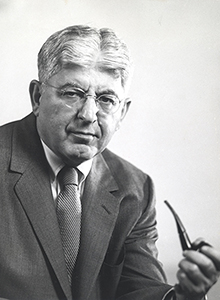
Despite Penn Central's deteriorating financial condition, the default reportedly caught investors by surprise. The company accounted for only half a percent of all outstanding commercial paper, but its failure had a substantial impact on investor sentiment. Penn Central's commercial paper had been marketed as very low risk, like most commercial paper, and Penn Central "had been for years a symbol to many people throughout the country of financial and industrial strength," as noted by Federal Reserve Chairman Arthur Burns (Board Minutes, June 22, 1970). In addition, Penn Central had retained a "prime" credit rating, and Goldman Sachs, the dealer of Penn Central's commercial paper, continued to sell the paper even as the company's financial state declined, which led to a Securities and Exchange Commission investigation (SEC 1972, pp. 271, 290). Investors responded to the news of Penn Central's default by pulling back from other commercial paper issuers, creating a credit crunch.
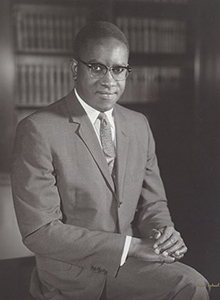
Because commercial paper is typically due in 30 days or less, its issuers are vulnerable to a stop in credit access during that window if they cannot roll over their paper. A couple of days after Penn Central's bankruptcy, two or three major commercial paper issuers reportedly faced serious difficulty of this kind. These difficulties continued to mount and by the end of the week, "an increasingly disturbing situation" had developed, as reported to Federal Reserve Governor Andrew Brimmer by David Rockefeller, the president of Chase Manhattan Bank (Brimmer 1970). Over the next few weeks, the volume of nonbank commercial paper outstanding fell by 10 percent as a "major run on commercial paper developed" (Schadrack and Breimyer, p. 289).
Commercial paper issuers sought commercial bank loans. They drew down lines of credit that were already in place and sought new lines or loans (Federal Reserve Greenbook July 15, 1970, p. III-8). For example, Chrysler's consumer finance arm, Chrysler Acceptance, came under pressure. It had $1.4 billion in commercial paper outstanding and $600 million of bank lines in place, creating a risk that it might have to suddenly repay $800 million. Chrysler's stock price fell sharply, as did the stocks of other commercial paper issuers (Calomiris 1994) and of corporations viewed as having short-term liquidity challenges (Vartan 1970). Across sectors, concerns focused especially on consumer finance companies, railroads, and airlines (Board Minutes, June 22, 1970, p. 7).
As the episode unfolded, Fed officials became concerned that tight credit conditions could adversely impact the economy and took the following actions.
First, the Fed made sure banks knew discount window loans were available if they needed extra funding to meet the needs of commercial paper issuers. Over the weekend of Penn Central's failure, the Federal Reserve Bank of New York's First Vice President, William Treiber, contacted the eight largest New York City banks to remind them that discount window loans from the Federal Reserve were available (Board Minutes, June 22, 1970, p. 4). The Fed's communication that it would give "sympathetic consideration" to such loans likely constituted a slight liberalization of access to the discount window, even though there were no changes to the terms of lending, such as the interest rate or collateral requirements (Calomiris 1994). At the time, the Fed had a longstanding policy of encouraging a "reluctance" to borrow from the discount window, which it would enforce for example by examining the reason for a sudden large increase in discount window borrowings. The Fed's communication in this episode likely signaled to banks that the reluctance doctrine did not apply in a time of stress like this.
Second, the Fed supported banks' ability to raise deposits as an additional means of meeting demands from commercial paper issuers. On Tuesday, June 23, the Board of Governors of the Federal Reserve System voted to partially suspend Regulation Q. This suspension allowed banks to pay higher rates for deposits, improving their ability to raise funds. Specifically, this suspension applied to large-valued certificates of deposit (CDs) usually sold to institutional investors. The rationale was that these investors would switch from purchasing commercial paper to bank CDs and therefore this re-allocation "would not constitute an increase in total credit flows" of the kind that Regulation Q was intended to prevent (Board of Governors press release, June 23, 1970). Ultimately, controls on large-sized CDs were never reinstated, in recognition that institutional investors could easily circumvent Regulation Q. (This asymmetric treatment of large vs. small depositors later became one of the key issues that led to the eventual repeal of Regulation Q in 1980.)2
Finally, the Fed prepared for the possibility of using an emergency power to make direct loans to commercial paper issuers if commercial banks were unable to meet their financing needs. Such loans would have been made under Section 13(3) of the Federal Reserve Act, which allows the Board of Governors to approve loans to any individual, partnership, or corporation in the country in the case of "unusual and exigent circumstances." In the end, the crisis abated without the need for the Board to approve such loans, but the internal debate that occurred about Section 13(3) is an important window into how this authority was viewed at the time.3
Discussion of the possible use of Section 13(3) began before Penn Central's failure, in early June 1970 (Keir 1970, Hexter 1970). The Fed had tracked Penn Central's decline closely, in part because of the V-Loan episode. More broadly, though, the Board was concerned about a general "crisis of confidence" in financial markets (Holland 1970). In 1966 and 1969, the Board had authorized the use of Section 13(3) for the first time since the 1930s, for the purpose of potential loans to savings banks and savings and loans if necessary to meet acute liquidity shortages. Though no such loans were made in either 1966 or 1969, in 1970 the Board was still worried about liquidity shortages. These concerns extended to a wide variety of institutions, including life insurance companies, mutual funds, and nonfinancial businesses such as Penn Central and other commercial paper issuers.
After Penn Central's failure, Fed officials examined the legal requirements of 13(3) loans.4 The first requirement was the existence of "unusual and exigent circumstances." The New York Fed advised that "in our view, the inability of a creditworthy major issuer of commercial paper to pay its paper at maturity would present 'unusual and exigent circumstances'" (New York Fed 1970b). At a Board meeting, Fed Governors debated whether 13(3) loans should be made preemptively, lest credit conditions become so tight that creditworthy firms would fail (Board Minutes, July 1, pp. 3-4). In the end, conditions did not deteriorate enough for the Board to decide the matter.
The second requirement of Section 13(3) was the inability of borrowers to secure adequate credit accommodation from commercial banks. Banks did face capacity challenges. By July 10, the New York Fed judged that banks "may have reached the limits of their ability to provide assistance" to commercial paper issuers (New York Fed 1970b). However, it turned out that the Fed's actions allowed banks to stretch just enough to accommodate commercial paper issuers, including by raising funds from $1 billion in discount loans and $3 billion in CDs in the 3 to 4 weeks following Penn Central's default (Schadrack and Breimyer, p. 289). Demand for bank credit by commercial paper issuers abated in late July and August (Federal Reserve Greenbook August 18, 1970, p. I-5).
The third requirement of Section 13(3) was that a borrower have collateral to backstop the loan. This posed challenges for commercial paper issuers; because commercial paper is unsecured, issuers did not have collateral already in place. Securing adequate collateral likely would have required negotiations with existing lenders to waive their claims in favor of the Fed taking a claim. At one point, a finance company had inquired about a 13(3) loan but abandoned the idea after finding that restrictive covenants tied up its collateral (Board Minutes, July 1, 1970, p. 2).
The final requirement of Section 13(3) was that a specific Reserve Bank would have needed to execute any 13(3) loans. In a proposal prepared by Governor Brimmer, the New York Fed would have taken this role and conducted the necessary credit analysis, while other Reserve Banks would have contributed funds (Brimmer 1970b).
After the Penn Central episode, Time magazine surmised that "the glory days of commercial paper may be ending" (Time 1970). In fact, the episode proved to be a small speed bump in the commercial paper market's growth. Investors regained confidence as rating standards tightened and the use of lines of credit became even more common (Stigum 1978, p. 489). Still, the Penn Central episode demonstrated the financial stability risks of the growth in financial activity outside of the banking system. At the time, Chairman Burns observed that commercial paper represented "a vast new unregulated banking system" and regretted that "he had been fearful that the day might come when holders of commercial paper would be unwilling to renew" (Board Minutes, June 22, 1970, p. 7). That day came again in 2008 and in 2020 when the commercial paper market came under very significant strain, and the Penn Central crisis is an antecedent to those episodes.
Endnotes
- 1 For additional background on the Penn Central episode, see Barker and Hughes (2024) and Nygaard (2020).
- 2 Governor Robertson dissented from this action. He did not see the situations as requiring an emergency measure and judged that announcing such a change would only increase fear in the market (Board Minutes, June 22, 1970, p. 37).
- 3 Fed officials also considered the possibility of making conduit loans—that is, passing loans through member banks. This structure would have allowed the Fed to avoid invoking Section 13(3) and would have left the challenge of credit risk evaluation to member banks. It is somewhat unclear, though, how this structure would differ from a typical discount window loan, unless it entailed some special permission for member banks to take out a greater amount of discount window loans than would normally be permitted.
- 4 The Board discussed the possible use of Section 13(3) at its meetings on June 26 and July 1, 14, and 21, 1970.
References
Barker, Tim and Chris Hughes. (2024) "Bigger than Penn Central: The Financial Crisis of 1970 and the Origins of the Federal Reserve's Systemic Guarantee." Capitalism: A Journal of History and Economics.
Board of Governors of the Federal Reserve System. (1970) Minutes. Available on FRASER.
Brimmer, Andrew F. (1970) "Memorandum of Conversation with Mr. David Rockefeller, Chairman, Chase Manhattan Bank." Andrew F. Brimmer Papers, Box 168 folder 4. Available on FRASER.
Brimmer, Andrew F. (1970b). "Direct Lending by the Federal Reserve System to Business and Individuals." July 20. Memo to the Board of Governors. Andrew F. Brimmer Papers, box 168 folder 3. Available on FRASER.
Calomiris, Charles W. (1994) "Is the Discount Window Necessary? A Penn Central Perspective." Review, Federal Reserve Bank of St. Louis, May/June. Available on FRASER.
Federal Reserve Bank of Chicago. (1968) "A Larger Role for Commercial Paper." Available on FRASER.
Federal Reserve Bank of New York (1970). "Summary Report on Application for V-Loan Guarantee in Connection with Loan to Penn Central Transportation Company." Andrew F. Brimmer Papers, Box 159 folder 4. Available on FRASER.
Federal Reserve Bank of New York (1970b). "Discount Window Accommodation of Issuers of Commercial Paper under Third Paragraph of Section 13 of the Federal Reserve Act." Available on FRASER.
Hexter, D. B. (1970) "Extension of credit by Reserve Banks under ¶ 3 of § 13 of Federal Reserve Act." Memo to Chairman Burns. Andrew F. Brimmer Papers, Box 168, Folder 4. Available on FRASER.
Holland, Robert C. (1970) "Contingency Plans for Possible Federal Reserve Actions Dealing with a Crisis of Confidence." Andrew F. Brimmer Papers, Box 168, Folder 4. Available on FRASER.
Keir, Peter M. (1970) "Effects of a possible default by a major corporation on its maturing commercial paper." June 3. Memo to Chairman Burns. Andrew F. Brimmer Papers, Box 159, folder 4. Available on FRASER.
Nygaard, Kaleb B. (2020) "1970 Commercial Paper Market Liquidity Crisis." Journal of Financial Crises. Available online.
Saulnier, Raymond J., Harold G. Halcrow, and Neil H. Jacoby. (1958) Federal Lending and Loan Insurance. NBER. Available online.
Schadrack, Frederick C. and Frederick S. Breimyer. (1970) "Recent Developments in the Commercial Paper Market." Monthly Review, Federal Reserve Bank of New York, December. Available on FRASER.
Securities and Exchange Commission. (1972) The Financial Collapse of the Penn Central Company. Staff Report of the Securities and Exchange Commission to the Special Subcommittee on Investigations. Available on FRASER.
Stigum, Marcia. (1978) The Money Market: Myth, Reality, and Practice. Dow Jones-Irwin.
Time. (1970) "Highly Volatile Paper." July 6, 1970, p. 60. Available online.
Vartan, Vartanig G. (1970) "Dow Plunges by 18 to Close at 698.11." Wall Street Journal, June 24, p. 65.
Published September 24, 2026. Jonathan Rose contributed to this article. Please cite this essay as: Federal Reserve History. "Penn Central Commercial Paper Crisis, 1970." September 24, 2026. See disclaimer and update policy.
 X
X  facebook
 email
email